Termite control in Modesto
Thin mud tubes on the foundation, wood that gives under a screwdriver, or winged insects after a warm spell of rain are good reasons to have someone look.
Calls are answered early morning to late evening
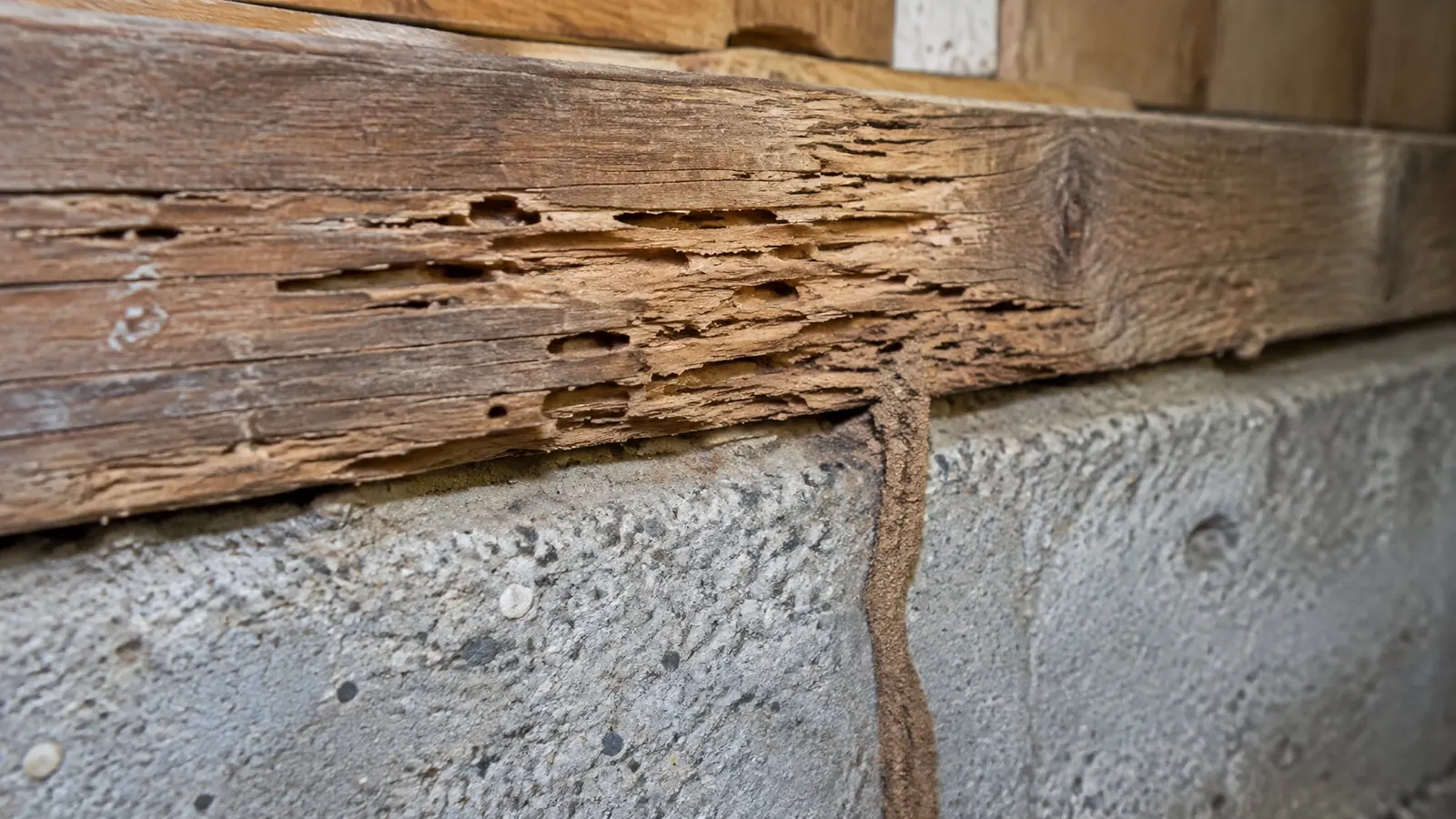
How to recognize the problem
The clearest sign of subterranean termites is the shelter tube, a pencil-thin run of soil and chewed wood going up a foundation, pier or pipe. Break a short piece open and you may see pale workers inside.
Damaged wood can look darkened or blistered, with a thin surface that punctures easily. Subterranean termites eat the soft layers and leave the harder ones, so the channels follow the grain.
Winged termites have straight antennae, equal wings and a broad waist. Winged ants have elbowed antennae, unequal wings and a pinched waist. UC IPM points out that a swarm on its own does not always mean the house is infested, so save a few in a jar for whoever inspects.
Why termites turn up around Modesto
UC IPM lists subterranean termites as the most common and most destructive type in California, with the native kind found statewide. They live in soil and need moisture, which gives a watered Valley yard plenty of appeal. Swarms tend to come on warm, sunny days after rain in spring or fall.
Wood touching soil is the easy way in. Think of fence posts, stacked lumber, buried scrap, and stucco that runs down to the ground and hides the route to the foundation. UC IPM's advice is at least 12 inches between structural wood and soil. Drywood termites do live in California too, but UC IPM describes them as most common in the south of the state.
What a termite visit usually involves
Every independent company works differently. This is the general shape, so you know what to ask about.
An inspection first
California law has a licensed Branch 3 inspector look at the property before a company signs an opinion on termites or starts work. Expect someone to check the foundation, crawl space, attic and any wood near soil.
A written report
State law calls for a written report to the person who asked for the inspection and to the owner within 10 business days of starting, and before any work begins. It should show what was found and what is being recommended.
Choices for treatment
Depending on what is found, the company may suggest local treatment, a soil treatment, wood repairs, or fumigation for some drywood cases. Ask why each one is being suggested.
Notice before pesticide
The company must give the owner and any tenant a written notice naming the pest and the pesticide before it applies anything. Ask how to prepare and how long to stay out.
When to call
- You have found a mud tube or wood with channels in it.
- Winged insects came out of a wall, window frame or floor, not from the yard.
- You are buying or selling and need a report. See the termite report guide.
- The house has had termites before. UC IPM suggests an inspection every 3 to 5 years in that case.
Common questions
Can I treat termites myself in California?
UC IPM says there are no reliable over-the-counter termite products in California and that a professional inspection comes before treatment. What you can do yourself is fix leaks, move wood away from soil and keep the crawl space vented and dry.
Does a swarm mean my house is infested?
Not always. Swarmers can fly in from outside. Swarmers coming from inside a wall or frame, or mud tubes on the foundation, are stronger evidence. Keep a few in a jar for the inspector.
Sources: UC IPM: Subterranean and other termites; Structural Pest Control Act, sections 8516 and 8538. Checked 4 November 2026.
Seeing it now? Make the call.
You will be connected with an independent pest control company that works in your area. Say what you have seen and where, then ask about the visit. Nothing is decided until you agree to it with the company.
Calls are answered early morning to late evening
Calls may be recorded. See the referral disclosure and privacy policy.